

Corporate events in Sydney? They’ve changed. A lot, honestly. Especially in recent years. Businesses care more now. About food quality. Presentation. Dietary inclusivity. Sustainability. The whole guest experience, really.
Breakfast meeting in Sydney CBD? Team celebration in the Inner West? Christmas party on the Northern Beaches? Doesn’t matter. Catering shapes how smoothly it all runs. Big influence. Plain and simple.
And choosing food isn’t just picking a menu. Not even close. There’s timing. Venue facilities. Seasonal produce. Dietary requirements. Service styles. Waste management. Lots to juggle. That’s where a professional Caterer helps. They pull the details together. Organisers stay free. Free to focus on guests. And on the event’s actual purpose.
Consider the Sydney Season When Planning the Menu
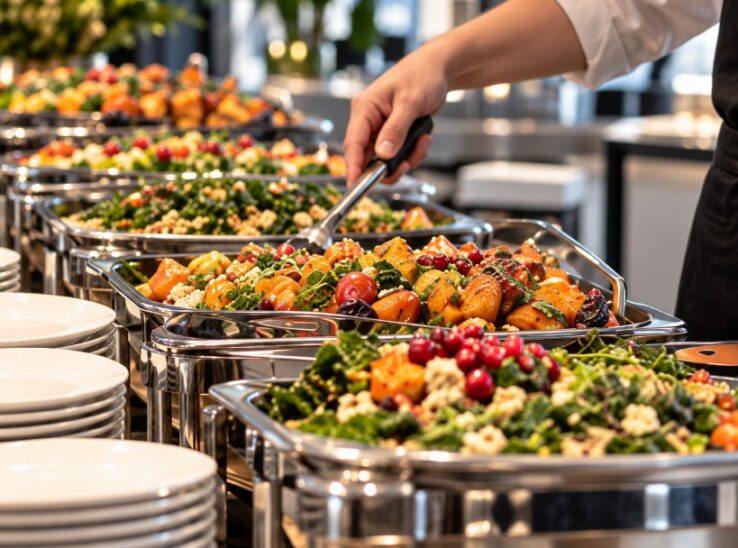
Sydney’s seasons? Great for menus. Plenty of room for ideas. Interesting ones. Locally appropriate ones.
Warmer months first. Think lighter dishes. Fresh salads. Seafood. Seasonal fruit. All work well for corporate functions. Summer events especially. Christmas parties included. Relaxed menus suit them best. Fresh produce. Grilled meats. Prawns. Salads. Refreshing desserts. Easy, breezy, done.
Then autumn arrives. Winter follows. Menus shift. More substantial now. Roasted vegetables. Hearty salads. Slow-cooked dishes. Warm desserts. Comfort food, basically.
Spring? Lighter again. Colourful vegetables. Fresh herbs. Fresh fruit. Bright and simple.
Seasonal NSW produce matters too. Why? It ties the menu to the place. Feels more connected. More local. Planners in the Eastern Suburbs can do this. Sutherland Shire too. Hills District as well. Menus that reflect the time of year. Not the same dishes. Not all year round. Honestly, that gets boring fast.
For practical menu inspiration, the Sydney seasonal fruit and vegetable guide outlines which ingredients are available throughout the year.
Match the Catering Style to the Event
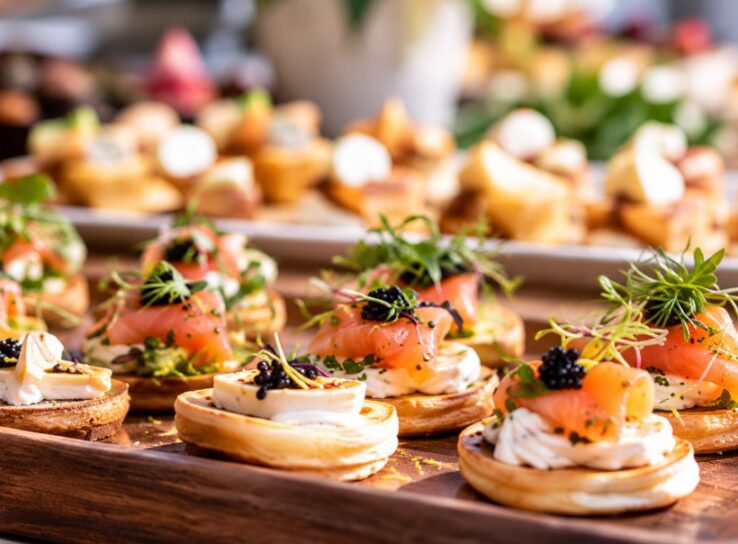
Event format matters. It should shape how food gets served. Every time.
Formal business lunch? Plated meals might suit. Networking event? Different story. Canapés work better there. Small portions. Things guests can enjoy on the move. Chatting. Mingling. Walking around.
Conferences and seminars next. Buffets work. So do individually portioned meals. Both keep service efficient. Especially with big crowds. Lots of attendees. Limited break time. Everyone fed quickly.
Breakfast meetings? Keep it simple. Easy-to-eat options. Why? People are busy. Reviewing presentations. Talking with colleagues. Hands half full.
Location changes things too. Take Western Sydney. A large workplace gathering there needs one approach. An intimate client event in Sydney CBD? Totally different. So think ahead. Venue layout. Guest numbers. Schedule. Sort those first. Then pick a service style. That’s how unnecessary delays get avoided.
For another perspective on personalised dining experiences, see this article about private dining as an alternative to traditional catering.
Make Dietary Inclusivity Part of the Planning Process
Dietary requirements? Hugely important now. At corporate events especially. Vegan. Vegetarian. Gluten-free. All of them. Planned from day one. Not last-minute swaps. Not afterthoughts.
Useful trick? Ask attendees early. During registration. About their dietary requirements. Simple step. The catering team gets proper information. Enough to prepare suitable meals. And on the day? No confusion. None.
Menus can lean naturally inclusive too. Vegetable salads. Grain-based sides. Fresh fruit. Plant-based appetisers. Easy wins.
Gluten-free needs extra care, though. It’s not just removing bread. Or pasta. From a standard meal. That’s not enough. Organisers should think about preparation. And cross-contamination procedures. Properly.
Then labelling. Clear labelling. Simple. Effective. Guests should spot suitable dishes. Easily. Without stopping service staff. Without guessing ingredients. No assumptions needed.
The NSW Food Authority’s catering guidelines explain food safety responsibilities, allergen declarations, and measures to prevent contamination.
Reduce Waste Through Better Planning
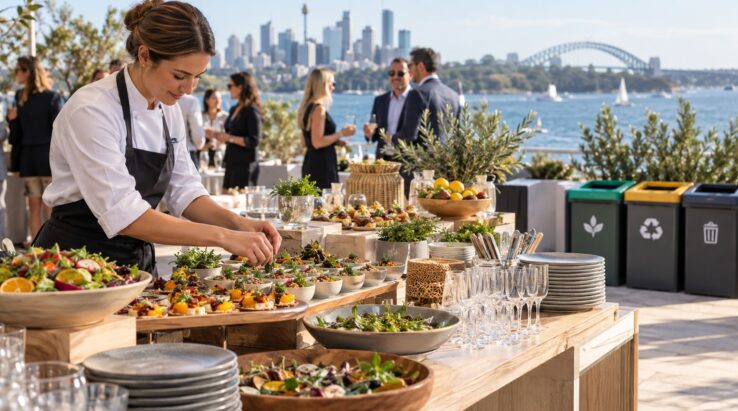
Sustainability matters more now. To Sydney businesses especially. Increasingly so. And food waste? Big area. Practical improvements are possible. Without hurting the guest experience at all.
Start with guest numbers. Accurate ones. Over-order? Unnecessary waste. Under-order? Hungry guests. Neither’s good. Flexible menu planning helps too. Caterers can use seasonal ingredients better that way.
What about zero-waste? It’s doable. Use produce efficiently. Choose reusable serviceware where appropriate. Think about surplus food. What happens after the event? Plan for it.
Smaller portions help sometimes. Especially paired with wider selections. Guests pick what they actually want. Less left on plates. Less binned.
Outdoor functions bring extra issues. Northern Beaches, say. Or the Eastern Suburbs. Refrigeration. Food protection. Responsible disposal of packaging. Practical stuff. Easy to forget. Important to remember.
Businesses looking for practical ways to reduce waste can explore the NSW Government’s Your Business is Food program, which provides resources for improving food waste management.
Think About Timing and Guest Experience
Good catering? Tied closely to scheduling. Very closely.
Food served too early? Freshness suffers. Long gaps between sessions and meals? Attendees get distracted. Hungry people don’t focus. Honestly, who does?
So planners should share a running sheet. A clear one. Arrival times. Presentations. Breaks. Meal periods. Everything. Especially useful for conferences. Several hundred people. One short window. Everyone needs feeding. No room for chaos.
Networking events work differently. Staggered food service helps there. Guests keep talking. Conversations flow. No mad rush. No crowd around one buffet.
Christmas functions need thought too. Sydney’s summer is hot. Cold food must stay properly chilled. Plenty of water needed. Non-alcoholic options too. Practical. Important. Non-negotiable, really.
Work With the Venue and Catering Team
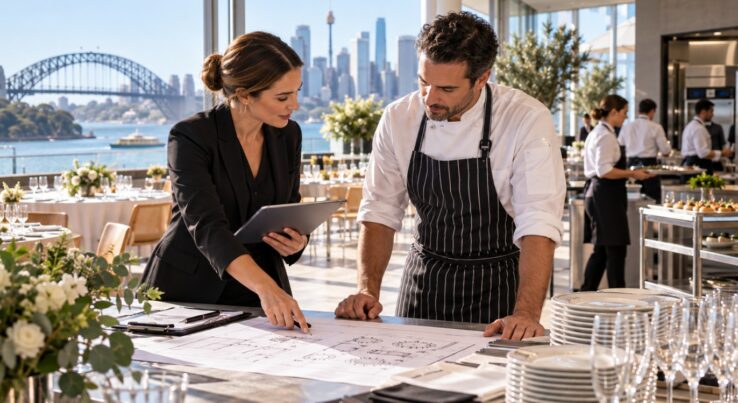
Every venue’s different. Different facilities. Different access arrangements. Different restrictions.
Sydney CBD venues? Loading access can be limited. Suburban venues? Other challenges. Parking. Kitchen facilities. Outdoor service areas. Each one has quirks.
Talk early. That’s the key. Event day gets much easier. Planners should confirm the basics. Kitchen space. Power requirements. Refrigeration. Table arrangements. Service access. Clean-up responsibilities. Who does what? Settle it upfront.
Professional catering teams help here too. How much food is right? For this format? This guest count? They know. Experience counts. Especially across different parts of Sydney. Inner West. Western Sydney. Hills District. Each area’s a bit different.
Create a Menu That Reflects the Occasion
Bottom line? Successful corporate catering isn’t just enough food. It’s more than that. Much more. The menu should suit the occasion. The season. The people attending.
Summer Christmas party in Sydney? Fresh, relaxed food works. Perfect for outdoor dining. Winter conference? Different vibe. Warming meals. Substantial refreshments. Seasonal NSW produce helps. Inclusive dietary choices help. Sensible waste reduction helps. Together? A better experience overall.
Plan thoughtfully. Communicate clearly. Then catering stops being an afterthought. It becomes part of the event. Fully integrated. So consider it all early. Menu. Service style. Venue. Sustainability. Dietary needs. Do that, and Sydney event planners get results. Professional gatherings. Organised ones. Welcoming ones. Right for the occasion. Every single time.